
The Field at a Glance
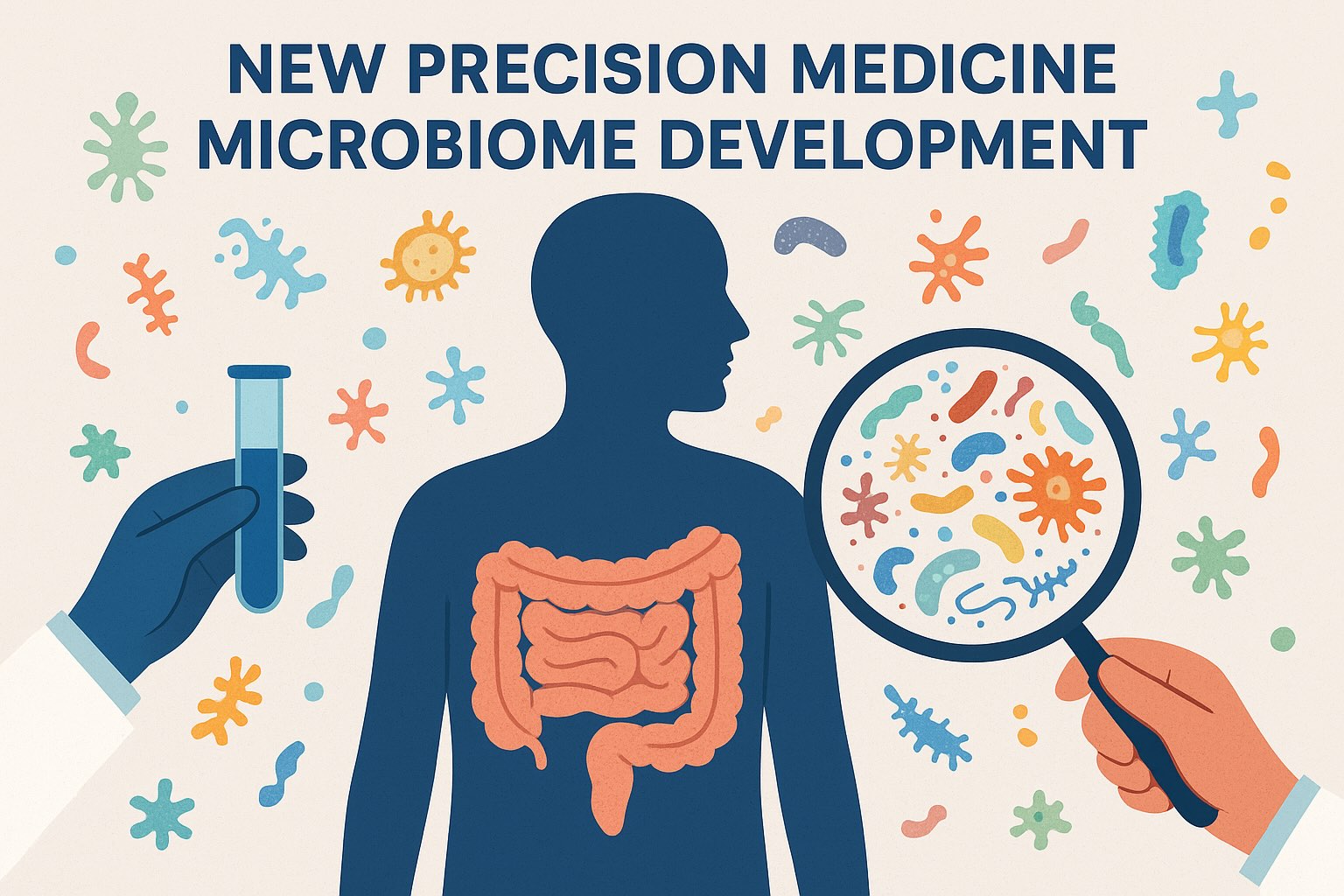
The human gut contains trillions of microorganisms—bacteria, fungi, viruses, and archaea—that influence digestion, immunity, metabolism, and neurological function. Metagenomic studies estimate the collective genes of our gut microbiome outnumber human genes by 100 to 150 times. Roughly 70-80% of the body’s immune cells reside in gut-associated lymphoid tissue, making the intestine a major immunological organ.
Several technical advances now enable therapeutic development. Next-generation sequencing (NGS) allows strain-level characterization of gut microbiota. Multi-omics approaches integrate genomic, transcriptomic, and metabolomic data to identify functional targets. Machine learning platforms help screen candidate strains and predict responses. GMP-grade microbial manufacturing supports the consistency and safety required for clinical use.
What Is Precision Microbiome Therapy?
Precision microbiome therapy involves selecting or engineering specific microorganisms to produce defined effects in the body—modulating immune signaling, metabolism, inflammation, or other pathways. It differs from generic probiotics in three ways:
- Personalized: Treatment can be guided by individual microbiome sequencing data
- Targeted: Strains are chosen or designed to exert specific functional effects
- Regulated: Therapeutic products are classified by the FDA as Live Biotherapeutic Products (LBPs)—biological products containing live organisms used to prevent or treat disease, distinct from vaccines
The FDA’s 2016 draft guidance outlines Chemistry, Manufacturing, and Controls (CMC) expectations for LBPs in early clinical trials, including strain identification, stability testing, and preclinical safety data.
2025: Where Things Stand
This year has brought measurable progress. The first genetically engineered microbiome therapy completed human trials and published results in Science. FDA granted new designations for infant-focused therapies targeting necrotizing enterocolitis. Oncology trials using precision bacterial consortia to enhance immunotherapy response completed enrollment.
At the same time, 2025 has reinforced the field’s central challenge: what works in animal models and healthy volunteers often doesn’t translate to patients with disease. Two live biotherapeutic products have FDA approval—both for the same indication (recurrent C. difficile infection). Broader applications remain in development.
Clinical Reality: The Stanford-Novome Trial
A July 2025 study published in Science illustrates both the progress and the obstacles.
Researchers from Stanford and Novome Biotechnologies engineered Phocaeicola vulgatus, a common gut bacterium, to degrade oxalate—a compound that causes kidney stones. The bacteria required porphyran, a seaweed-derived nutrient, to survive, giving doctors a way to control colonization.
In rat models, urinary oxalate dropped by 47%. In healthy human volunteers, colonization was dose-dependent, safe, and reversible.
In patients with enteric hyperoxaluria—the target population—results were less clear. Engraftment was inconsistent, and oxalate reduction wasn’t statistically significant. Genomic analysis showed horizontal gene transfer had allowed native bacteria to compete with the therapeutic strain. Some engineered bacteria mutated in ways that bypassed the safety controls.
The study shows that engineered bacteria can colonize the human gut and function as designed under controlled conditions. It also shows how the gut’s complexity can undermine efficacy in actual patients.
What’s Been Approved
The FDA has approved two live biotherapeutic products, both for preventing recurrent Clostridioides difficile infection.
Rebyota (approved November 2022) is rectally administered and showed treatment success of about 71% versus 58% for placebo. Vowst (approved April 2023) is the first oral formulation, with recurrence rates of 12% compared to 40% with placebo.
These approvals establish that microbiome therapies can meet FDA standards. But C. diff recurrence is a relatively straightforward target: patients have depleted flora after antibiotics, and restoration helps prevent recolonization by the pathogen. More complex conditions present greater challenges.
Infant Microbiome: A Different Picture
One area showing consistent results is infant gut health—specifically, preventing necrotizing enterocolitis (NEC), a life-threatening intestinal disease in preterm infants that kills more than 500 babies per year in the United States.
Infinant Health, a UC Davis spinout formerly known as Evolve Biosystems, has developed Bifidobacterium longum subspecies infantis EVC001—a bacterial strain that colonizes the infant gut and utilizes human milk oligosaccharides in breast milk. Research suggests B. infantis was historically dominant in infant guts but has largely disappeared in developed countries due to antibiotic use and changes in birthing practices.
Clinical evidence has linked EVC001 administration to reduced NEC incidence in very low birth weight infants, lower levels of antibiotic-resistant organisms, and reduced gut inflammation markers. In May 2025, the FDA granted Orphan Drug and Rare Pediatric Disease designations to INF108, Infinant’s next-generation strain designed for NEC prevention, with human clinical trials planned.
The infant microbiome may be more tractable than adult conditions—there’s a defined developmental window, a biological pairing with breast milk, and a less established competing microbiome.
Disease Areas Under Investigation
Microbiome imbalances have been associated with a range of conditions, driving research across multiple therapeutic areas:
Gastrointestinal disease: Beyond C. diff, trials are investigating precision approaches for inflammatory bowel disease (ulcerative colitis and Crohn’s disease), irritable bowel syndrome, and metabolic dysfunction.
Oncology: Gut microbiome composition appears to influence response to cancer immunotherapy. Microbiotica completed enrollment in September 2025 for MELODY-1, a Phase 1b trial testing MB097 alongside pembrolizumab in advanced melanoma patients who haven’t responded to immunotherapy. MB097 is a consortium of nine bacterial strains identified through microbiome analysis of checkpoint inhibitor responders. Results expected early 2026.
Metabolic disorders: Research links gut microbiota to Type 2 diabetes, obesity, and related conditions, with studies examining whether microbiome modulation can improve metabolic markers.
Neurological and psychiatric conditions: The gut-brain axis—bidirectional communication between the gut microbiome and central nervous system—has generated interest in depression, anxiety, and neurodegenerative diseases including Parkinson’s. Clinical evidence remains early-stage.
Autoimmunity: Microbiome involvement in immune development has prompted research into allergic diseases, eczema, and autoimmune conditions.
Research infrastructure: Cedars-Sinai launched its Human Microbiome Research Institute in May 2023 under Dr. Suzanne Devkota, focusing on translational research across gastrointestinal disease, cancer, metabolism, and autoimmunity.
It’s worth noting that many microbiome-disease associations are correlational. Demonstrating that microbiome manipulation can treat these conditions requires controlled trials—and results have been mixed.
The Regulatory Landscape
The FDA classifies live biotherapeutics as biological products containing live organisms intended to prevent or treat disease (excluding vaccines). Draft guidance from 2016 covers Chemistry, Manufacturing, and Controls expectations for early trials.
The Rebyota and Vowst approvals provide precedent, but questions remain for engineered strains and multi-species products—particularly around potency assays, genetic stability, and monitoring horizontal gene transfer.
A 2024 Frontiers in Microbiomes review noted that challenges around trial endpoints, durability, and long-term safety require continued attention.
Challenges
Several obstacles complicate microbiome therapeutic development:
Biological variability: Baseline microbiome composition differs substantially between individuals. A therapy that engrafts successfully in one patient may fail in another due to differences in existing flora, immune status, or gut environment.
Reproducibility: Diet, medications, stress, and environmental factors can alter microbiome composition and therapeutic outcomes. Controlling these variables in trials—and in real-world use—is difficult.
Delivery and stability: Live microorganisms require careful handling, storage, and formulation. Maintaining viability through manufacturing, distribution, and administration adds complexity compared to conventional drugs.
Mechanism of action: Even when clinical benefit is observed, the underlying mechanisms are often incompletely understood. This complicates dose optimization, patient selection, and regulatory review.
Genetic stability: As the Stanford-Novome trial showed, engineered bacteria can mutate or exchange genes with native flora, potentially losing therapeutic function or bypassing safety controls.
Cost and access: Personalized, biologic-grade therapies are expensive to develop and manufacture. If microbiome treatments remain high-cost, access and equity become concerns.
Where This Leaves Us
Precision microbiome therapy has moved from concept to clinic. Two products are FDA-approved. Infant-focused approaches show consistent results. Clinical trials are underway across oncology, inflammatory disease, and metabolic conditions.
The limiting factor remains translation. What works in animal models and healthy volunteers often doesn’t work in patients with established disease. The gut’s complexity—species interactions, genetic exchange, individual variation, diet, and drugs—creates variables that current approaches don’t fully control.
The C. diff approvals and infant microbiome work suggest that success is more likely when the biology is favorable: a defined therapeutic window, clear endpoints, and less competition from established flora. Extending these approaches to chronic adult conditions will require both scientific advances and realistic timelines.
